
The Edmonton Luxury Home Buyer's Guide: What Nobody Tells You at This Price Point
19 min read

Mark Gummer
REALTOR® · The Agency North Central Alberta
Mar 24, 2026
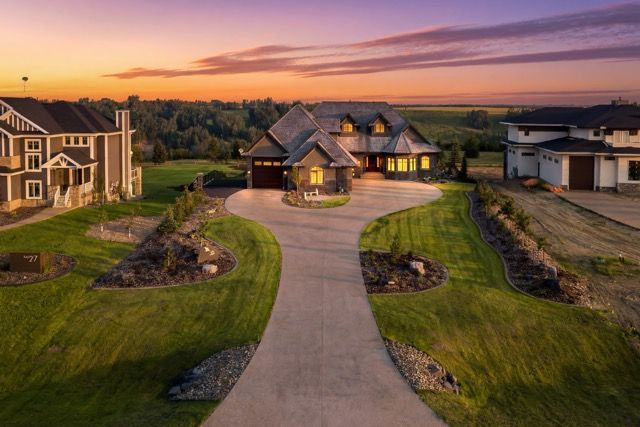
This Guide Isn't for Everyone. It's for You.
Most buyer guides start with "Step 1: Get Pre-Approved." If you are shopping in Edmonton's luxury segment, you have already handled that. You are not here for a mortgage primer or a checklist of what documents to bring to a showing.
You are here because buying at this level is genuinely different, and most of the advice available online was written for a completely different buyer.
At this price point, the questions that matter are harder ones. Not can I afford this? but is this actually worth what they're asking? Not what neighbourhood should I choose? but what makes one lot fundamentally more valuable than another? Not should I get an inspection? but what should my inspector specifically be looking for in a home this complex?
This is the guide I wish existed when I started working in this segment. It reflects what I have learned from sitting across the table from some of Edmonton's most discerning buyers and sellers, and from walking through hundreds of properties where the price tag and the true value told very different stories.
Why I Love Working at This Price Point
I will be honest: this is not where I started. Early in my career I worked across all price points, and I genuinely still do. Every client who trusts me with one of the biggest decisions of their life deserves the same standard of care regardless of the price on the listing. But something shifted when I began working consistently in the luxury and estate segment, and that work has become a genuine passion that I bring to every transaction at every level.
The buyers are different in the best possible way. They are engaged, informed, and genuinely curious about what they are purchasing. The conversations go deeper. We are not just talking about square footage and school zones. We are talking about builder philosophy, how a home was designed to live across seasons, what the lot position means in twenty years, and whether the systems inside the home reflect genuine quality or just the appearance of it.
I have walked through properties with clients where we both knew within the first ten minutes that something was off. The finishes looked right but the craftsmanship underneath them did not. I have also walked through homes where neither the photos nor the price captured what the property actually was, and I have had the privilege of helping a buyer secure something truly irreplaceable at a price that, in hindsight, was a gift.
That is what I love about this work. At the luxury level, there is real nuance. The difference between a good decision and a great one is not obvious, and having someone in your corner who has seen enough of both makes a meaningful difference.
Resale Luxury in Edmonton Is One of the Best Value Plays in Canadian Real Estate
This is the point I make to almost every buyer entering the Edmonton luxury market for the first time, and it consistently surprises them.
When a custom luxury home comes to resale in Edmonton, it almost never sells for what it would cost to replicate it today. Construction costs, land, architectural fees, builder margin, landscaping, technology integration, and the carrying cost of a multi-year build mean that what you can purchase on the resale market is frequently available at a significant discount to replacement value.
I have sat with buyers and walked through the numbers together. A home that would cost two and a half to three million dollars to build today, factoring in current labour costs, material pricing, and lot value, might be available on the resale market for considerably less. The original owners absorbed the cost of the build. You are buying the finished product.
This dynamic is not unique to Edmonton, but it is particularly pronounced here because Edmonton's luxury market is still, relative to Vancouver, Calgary, and Toronto, undervalued. The quiet wealth that has always existed in this city has not been fully priced in. That is changing, and it is changing quickly, but right now there are still resale opportunities available that would be unthinkable in comparable communities in other major Canadian cities.
The implication for buyers is clear: if you are weighing whether to buy an existing luxury home or build new, run the numbers carefully and honestly. In many cases, buying resale means you acquire the craftsmanship, the mature landscaping, the integrated systems, and the established community position, for a fraction of what starting from scratch would cost you.
The Builder Behind the Home Is an Asset. Treat It That Way.
When you buy a production home, the brand matters somewhat. When you buy a custom estate, the builder's name and reputation is one of the most important things on the specification sheet, and most buyers do not give it nearly enough weight.
Here is why it matters: a luxury home built by a respected estate builder holds its value, commands buyer confidence on resale, and is almost always easier to sell. A home built by an unknown or volume builder, regardless of how impressive the finishes look on the day of purchase, will face questions about quality, longevity, and craftsmanship every time it changes hands.
I have seen this play out more than once. Two homes in the same community, similar size and finish level, priced similarly. One was built by a builder with a long track record, industry awards, and a reputation for vetted trades. The other was a one-off build by a contractor who had moved upmarket opportunistically. The first sold confidently. The second sat, and when it sold, it sold at a meaningful discount because buyers could not get comfortable with what they could not verify.
Before you make an offer on any custom luxury home, research the builder specifically. How long have they been building at this price point? What awards have they received and from whom? Do they use local, vetted trades consistently or whoever was available for the project? Have they built in this price segment before, or is this home at the ceiling of their typical range?
The finishes are what you see. The builder's reputation is what you are actually buying.
Position Is the One Thing You Cannot Renovate
In the luxury segment, buyers spend enormous energy evaluating interior finishes and not nearly enough evaluating the lot itself. This is one of the most consistent patterns I see, and it is one of the most important to correct.
Finishes can be updated. Technology can be replaced. Landscaping can be redone. But you cannot move a property. You cannot change its orientation. You cannot manufacture a view that does not exist, or create privacy where there is none.
The rarest lots in any community combine size, privacy, position, and an irreplaceable characteristic. That characteristic might be a river valley view that is structurally protected from future development. It might be adjacency to a world-class golf course or recreational facility. It might be a specific position within a community that captures something no other lot can. In some cases it is as simple as the lot being one of very few in a community that offers a particular combination of features that cannot be replicated.
When I am helping a buyer evaluate a luxury property, one of the first questions I ask is: what is the argument for this lot specifically? Not the home. The lot. If that argument is compelling and defensible, we are building on solid ground. If the lot is interchangeable with a dozen others in the same community, the value of everything built on top of it needs to be interrogated more carefully.
When you are evaluating a luxury property, ask your agent to walk you through what makes the specific lot defensible as a long-term asset. That conversation should be one of the first you have, not an afterthought after you have fallen in love with the kitchen.
Technology: What Is Worth Paying For and What Is Not
Luxury homes across Edmonton increasingly market themselves on smart home technology, and the range of what that phrase means varies enormously. Understanding the difference protects you from overpaying and from inheriting a system that becomes a liability.
Enterprise-grade platforms like Crestron, Savant, and Control4 are the systems worth paying for. Crestron in particular is the gold standard, the same platform used in the world's finest hotels and corporate headquarters. It is professionally integrated, deeply customisable, built to last decades, and when it needs service, qualified technicians are available. A home with a properly installed Crestron system is not just convenient. It is a technology infrastructure that adds genuine value and transfers credibly to the next buyer.
Consumer smart home products like Nest, Ring, and SmartThings are fine in their context but should not be confused with professional home automation. A home priced at two million dollars with a Nest thermostat and some smart bulbs is not a smart home. When a seller markets these systems as luxury technology, that is worth probing further.
I have walked through showings where the listing highlighted "full smart home integration" and what we found was a mix of consumer products installed by the homeowner over several years, with no documentation, no integrator, and no way to know what was actually working. That is not a system. That is a collection of gadgets, and it needs to be understood as such before you assign it any value.
Before buying any technology-integrated home, ask who installed the system, whether there is a service contract in place, what documentation exists, and what is explicitly included in the purchase. All televisions, speakers, and associated hardware should be confirmed in writing as inclusions, not assumptions.
The Finishes That Hold Value and the Ones That Do Not
Not all expensive finishes age the same way, and some things that photograph beautifully depreciate faster than others. This matters because at the luxury level, you are making decisions that will affect resale value for years.
Professional-grade appliances from Wolf, Sub-Zero, and Miele are broadly recognised by buyers as genuine investments. A kitchen anchored by these names requires no apology to a future buyer and communicates clearly that the home was built with a standard in mind.
Architectural ceiling and millwork details, coffered ceilings, tray ceilings, hand-finished millwork, and custom built-ins, are labour-intensive to replicate and hold their appeal across design cycles. They read as craftsmanship rather than trend.
In-floor radiant heating in Alberta's climate is an infrastructure feature that buyers at this level increasingly expect. It is expensive to retrofit and invisible when it works perfectly, but buyers who have lived with it will not buy without it again. It is a feature that matters more in lived experience than it does in photos.
Stone and hardwood in principal spaces are timeless. High-end tile in bathrooms holds value when it is architectural rather than fashionable.
Where value can erode: overly specific or trend-driven design choices narrow the buyer pool on resale. Bold choices are entirely legitimate in a custom home. Just understand that the more personal the decision, the more it may need to be adjusted before the next sale. Imported or discontinued hardware lines can also become liabilities when pieces need replacing. And landscaping without a service contract can be perceived as a cost rather than a feature by buyers who are evaluating carrying costs.
The Acreage Question: Urban Luxury Versus Estate Living
One of the most fundamental decisions for a luxury buyer in the Edmonton market is whether they are purchasing urban luxury or estate acreage living. These are not simply different price points. They are different lifestyles, different asset profiles, and different buyer pools on resale.
Urban luxury in communities like Windermere, Cameron Heights, or Edmonton's mature river valley neighbourhoods offers proximity to restaurants and services, access to the city's amenities without a commute, and a broad resale market. The tradeoff is density, noise, and neighbours who are close.
Estate acreage living, in communities like Blackhawk, Riverstone Pointe, or a property set on its own vast parcel of land well outside the city, offers something urban lots simply cannot manufacture: privacy, scale, and a view that belongs entirely to you. The best of these communities combine that sense of seclusion with surprisingly short drives to urban amenities and world-class recreational facilities. You are not trading convenience for space. You are simply choosing to make space the priority.
The tradeoff is a narrower resale buyer pool and more active ownership. Wells, septic systems, and larger mechanical systems require attention that a city home does not.
I have worked with buyers who came in convinced they wanted an acreage and ultimately purchased urban. I have also worked with buyers who thought they wanted to be in the city and, once they spent real time in a community like Blackhawk, realised that what they had been describing as their lifestyle was actually an acreage lifestyle without knowing it. The buyers who are least satisfied with acreage purchases are those who bought for the aesthetics without fully accounting for the lifestyle change. The buyers who love it are the ones who wanted the space and the quiet first, and found the home second.
Ask yourself honestly which lifestyle you are buying. That answer should drive the search, not the photography.
What Your Inspector Should Focus On at This Level
A standard home inspection is designed for a standard home. At the luxury level, with complex mechanical systems, custom construction, and integrated technology, you need your inspector to go considerably deeper.
Mechanical systems in a luxury custom home are often more complex and brand-specific than in a production build. Your inspector should document the brand, age, and service history of every major system. In-floor radiant heating in particular requires specific maintenance history and should have records.
The building envelope matters enormously in Alberta's climate. Custom construction means there is no standardised quality control applied by a volume builder's process. Ensure your inspector evaluates the envelope specifically: insulation, window sealing, and any signs of moisture intrusion in walkout or below-grade spaces.
Technology systems are beyond the scope of most inspectors. Ask for a separate technology audit by a qualified integrator before possession. This should confirm what is included, what is functional, and what the service history looks like.
Solar installations, if present, require verification of system size, grid connection, monitoring functionality, warranty status, and installer documentation. A properly installed and documented solar system is a genuine financial asset. One with unclear provenance is a risk.
Connectivity infrastructure, including satellite internet equipment, should be confirmed as transferable and properly registered if it is listed as an inclusion.
Why Edmonton's Luxury Market Deserves More Attention Than It Gets
Edmonton has always had what I describe as stealth wealth. It is not flashy. The money here has not historically expressed itself the way it does in Calgary or Vancouver. But it is real, it is substantial, and it is increasingly reflected in the calibre of homes being built and sold in this city. That quiet confidence in the market is one of the things I find most compelling about working here.
Sales above one million dollars in Edmonton increased nearly 70 per cent in early 2025 compared to the previous year. A significant driver of that is interprovincial migration: buyers arriving from Ontario and British Columbia, encountering what Edmonton offers at the top end for the first time, and finding it extraordinary. The value per square foot, the lot sizes, the quality of the communities, and the proximity to recreational amenities would be unthinkable at these prices in Vancouver or Toronto.
That window is narrowing. It has not closed. But Edmonton's luxury market is repricing, and buyers who have been watching from the sidelines are beginning to understand what buyers who moved here in the last two years already know.
For buyers who are ready: there has rarely been a better time to acquire something exceptional in this city.
Let's Find Yours
If you are serious about finding something exceptional, not just what is available on the MLS today, but what might be coming, what is being held privately, and what represents the strongest value at this level, I would welcome a conversation.
More Insider News
Why More Torontonians Are Choosing Edmonton for Affordability, Opportunity, and Space
Moving to Edmonton from Toronto: What You Need to Know Before You RelocateConsidering a move from Toronto to Edmonton? This guide breaks down everything you need to know, from housing prices and cost of living to job opportunities, lifestyle, and climate. Learn how relocating can dramatically improve your buying power, reduce everyday expenses, and give you the space and financial freedom that’s increasingly out of reach in the GTA.

Your Ultimate Guide to Edmonton’s Spring 2026 Events, Festivals, and Activities
Things to Do in Edmonton This Spring 2026: Complete Guide to Events & FestivalsSpring in Edmonton comes alive with concerts, festivals, family shows, and outdoor adventures. From world-class music at Rogers Place to craft beer events, theatre performances, and river valley trails, this complete guide covers the top things to do across the city in March, April, and May 2026. Plan your weekends, explore seasonal highlights, and discover the best ways to enjoy Edmonton as the city shakes off winter.

What Life Looks Like When Housing Is Finally Within Reach
Vancouver to Edmonton: Your Guide to Making the MoveThinking about leaving Vancouver for a more affordable lifestyle? This article explores why thousands of British Columbians are moving to Edmonton, highlighting major cost-of-living differences, housing affordability, job opportunities, and overall quality of life. From significantly lower home prices and taxes to shorter commutes and more financial freedom, it breaks down what making the move really looks like, and why for many, it’s becoming the smarter choice.